Use ‘JUNE73’ code to discount 73% off


Famous Food in Bangkok
Key Takeaways
Bangkok’s food scene is not just good; it’s genuinely world-class, and most of it is available on the street for less than the price of a coffee back home. The famous food in Bangkok spans centuries of culinary tradition, Chinese influence, royal kitchen heritage, and pure street-side improvisation. But knowing what to eat is only half the equation. Knowing how to get around Bangkok to reach the right markets, the right piers, and the right neighbourhoods is what separates a great food day from a chaotic one. The Thai Go Day Pass, covering unlimited rides on both the Chao Phraya sightseeing boat and Thai Smile Bus city routes, is the single smartest tool for linking Bangkok’s best food stops into one seamless, delicious day.
Why Bangkok Food Hits Different
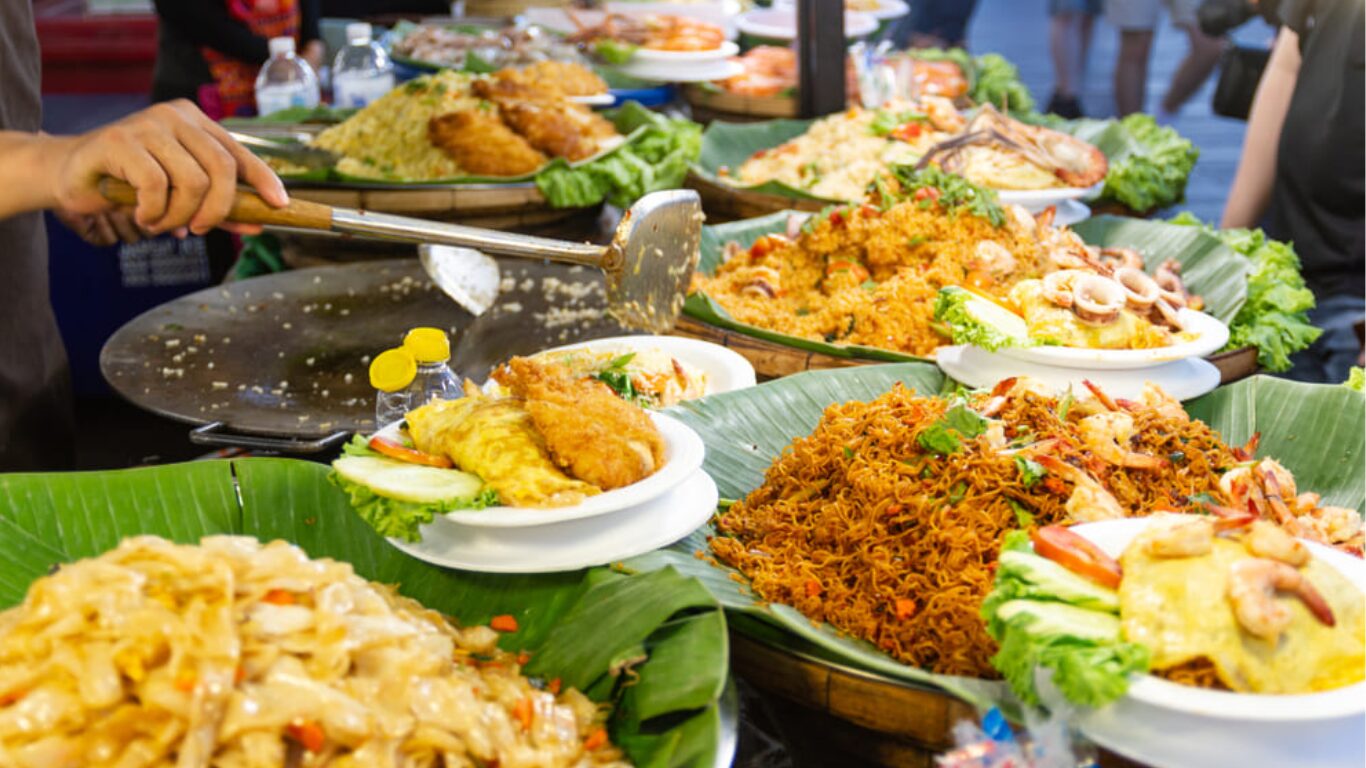
There’s a reason food writers keep coming back to Bangkok. The city feeds people at every hour, on every corner, at every budget, and the quality rarely dips. A bowl of boat noodles from a floating vendor, a plate of pad kra pao from a shophouse kitchen, mango sticky rice from a cart outside a temple: none of these require a reservation, a dress code, or a map that makes sense.
What they require is movement. Bangkok’s most famous food is scattered across neighbourhoods that don’t sit next to each other. Chinatown is not next to the flower market. The flower market is not next to the old city boat noodle spots. Getting between them efficiently, without burning half your day in traffic, is where the right how to get around Bangkok strategy makes everything work.
Famous Food in Bangkok You Need to Try
Pad Thai: The Dish That Needs No Introduction
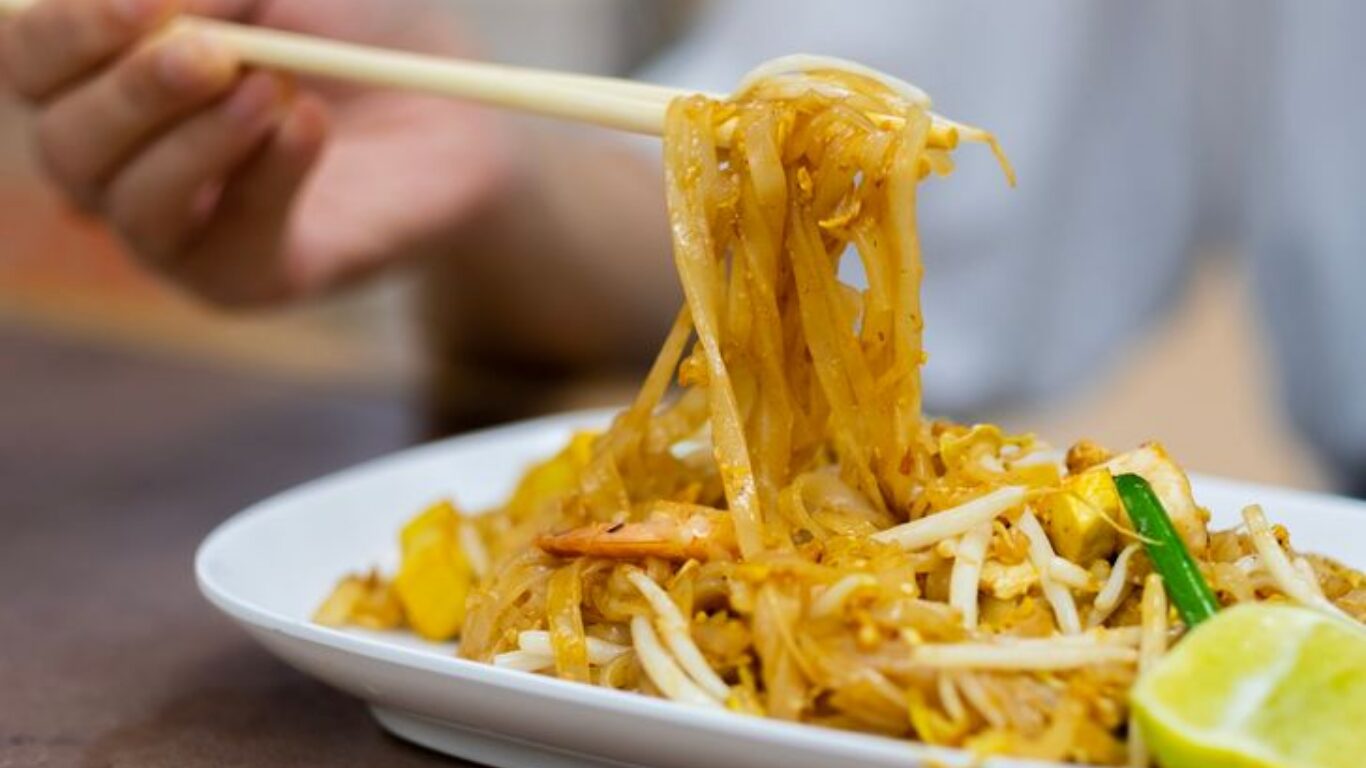
Every visitor tries pad thai. Not every visitor tries a good one. The best versions in Bangkok come from shophouses that have been cooking the same recipe for decades, wok-charred noodles, fresh prawns, a squeeze of lime, crushed peanuts on the side. Thip Samai near the old city is the most cited name, but the neighbourhood around it has strong contenders too.
Boat Noodles: Small Bowl, Big Flavour
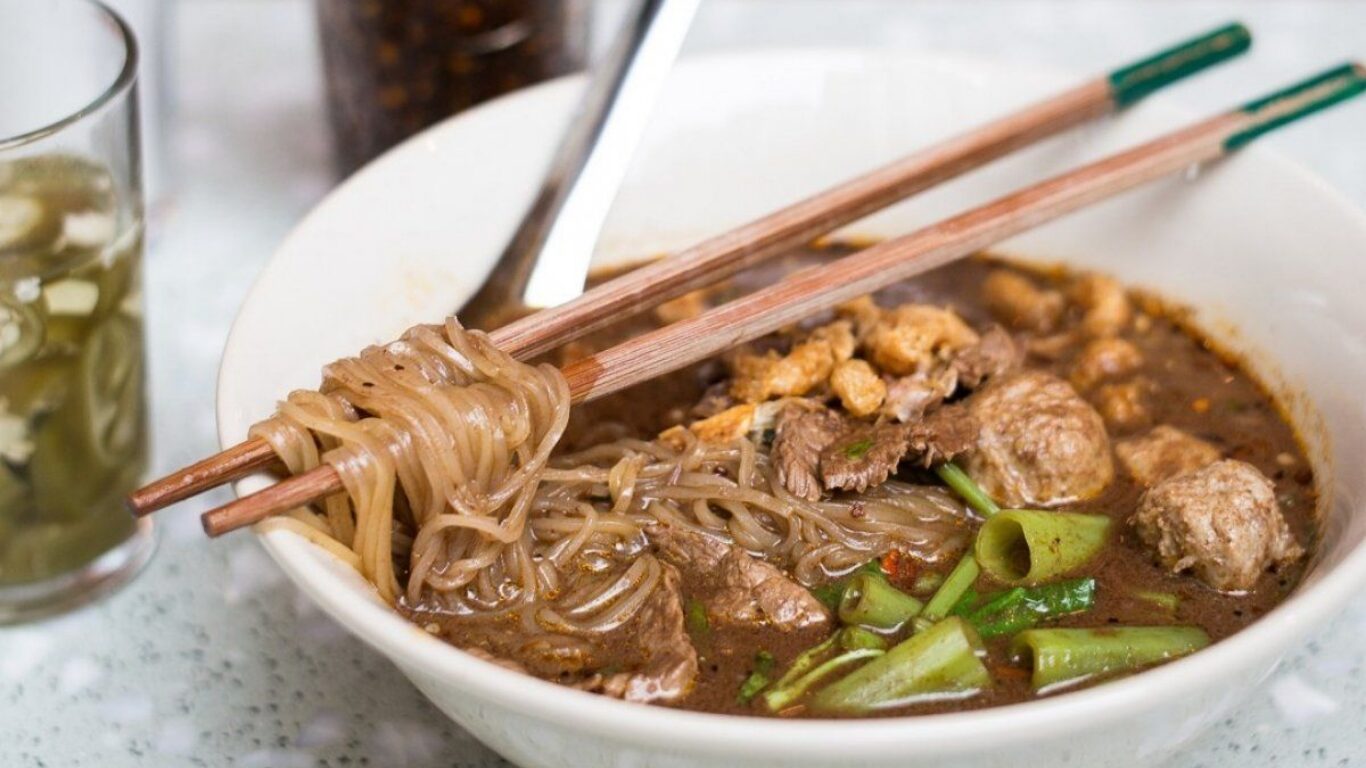
Boat noodles (kuay teow reua) are one of Bangkok’s most iconic dishes, small, intensely rich bowls of pork or beef noodle soup with a dark, herb-laced broth that’s been simmering for hours. Historically served from canal boats, today the best spots cluster near the river and in traditional market areas. Order three or four bowls. That’s standard.
Mango Sticky Rice:Bangkok’s Most Photogenic Dessert
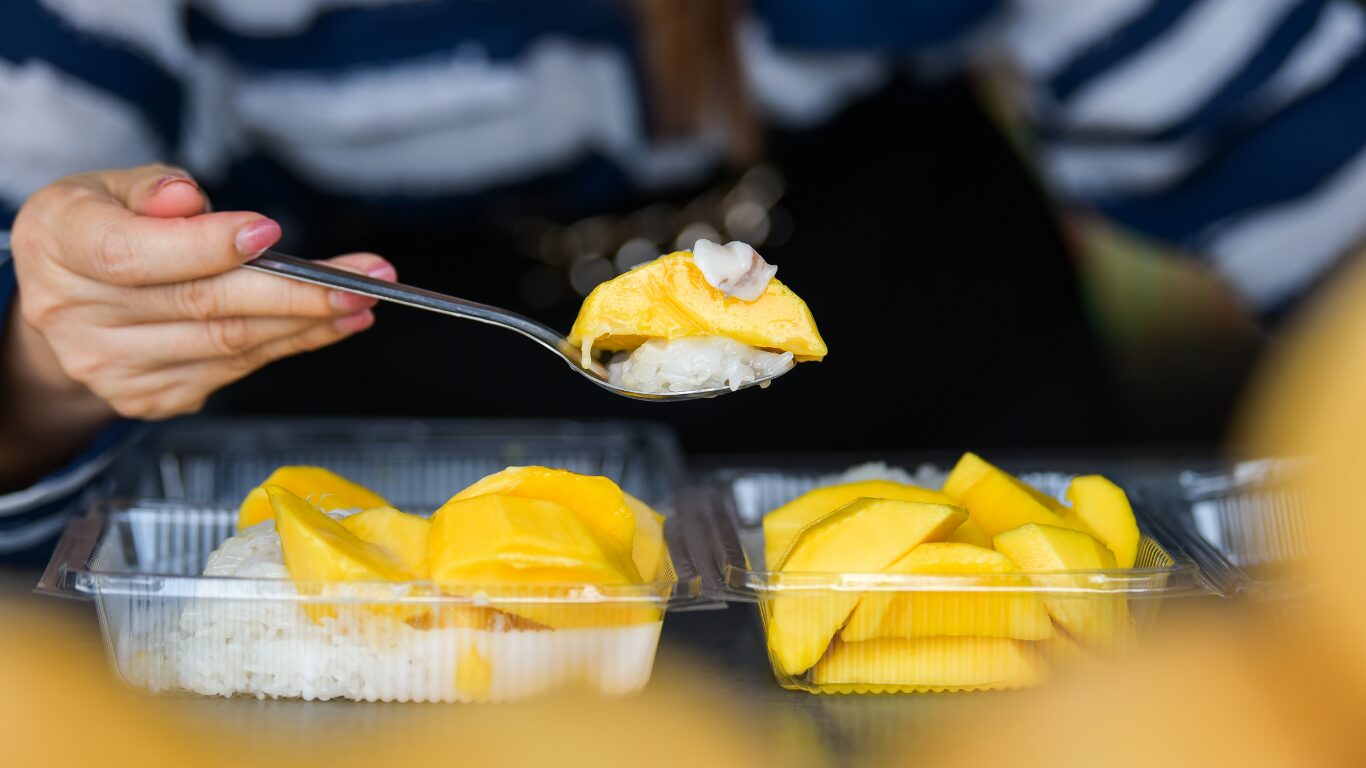
Ripe mango over warm glutinous rice, drenched in sweet coconut cream. It sounds simple because it is, and yet it’s the kind of thing you think about for weeks after leaving Bangkok. Available from street carts citywide, but the best versions appear at fresh markets in the morning when the mangoes are at peak ripeness.
Tom Yum Goong:Heat, Sour, Fragrant
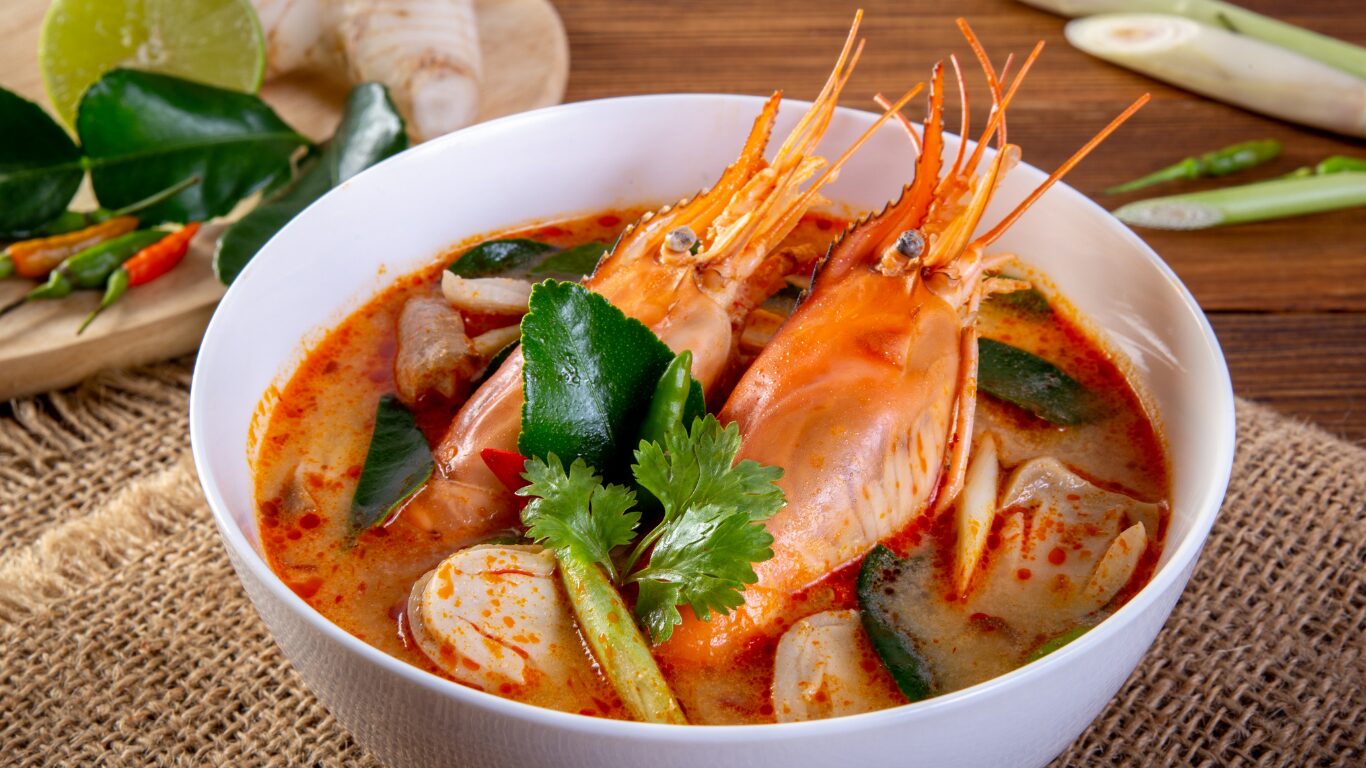
The famous food in Bangkok list is incomplete without tom yum goong, the lemongrass, galangal, and lime leaf prawn soup that Thailand exports to the world but serves best at home. Restaurant versions around the riverside area tend to use freshwater prawns that arrive daily from the market, and the difference in quality is immediate.
Pad Kra Pao: Bangkok’s Everyday Favourite
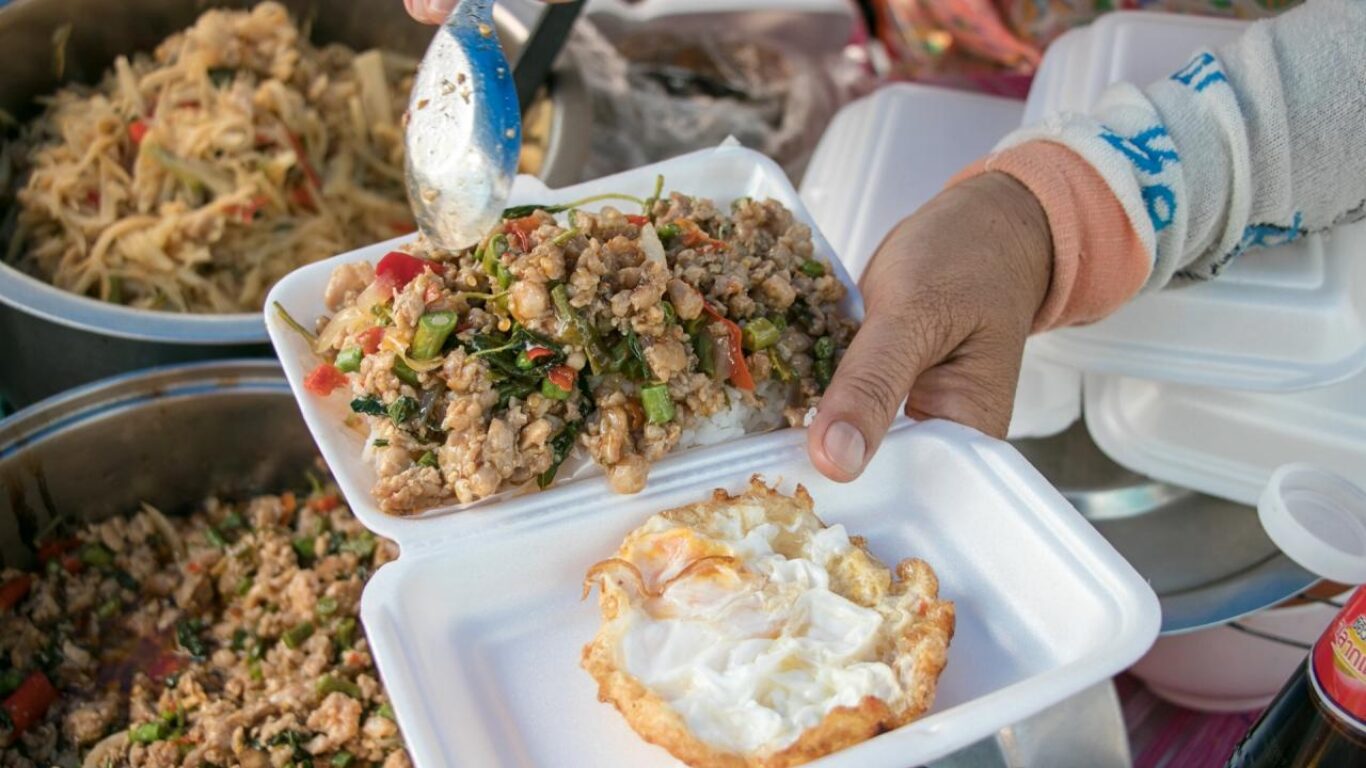
If pad thai is Bangkok’s dish for tourists, pad kra pao, stir-fried minced pork or chicken with holy basil and a fried egg on top, is Bangkok’s dish for everyone else. Locals eat it for breakfast, lunch, and late-night dinner. It costs almost nothing. It is almost always excellent. It’s the dish that tells you more about Bangkok’s food culture than any fine dining experience could.
How to Get Around Bangkok for a Food Day
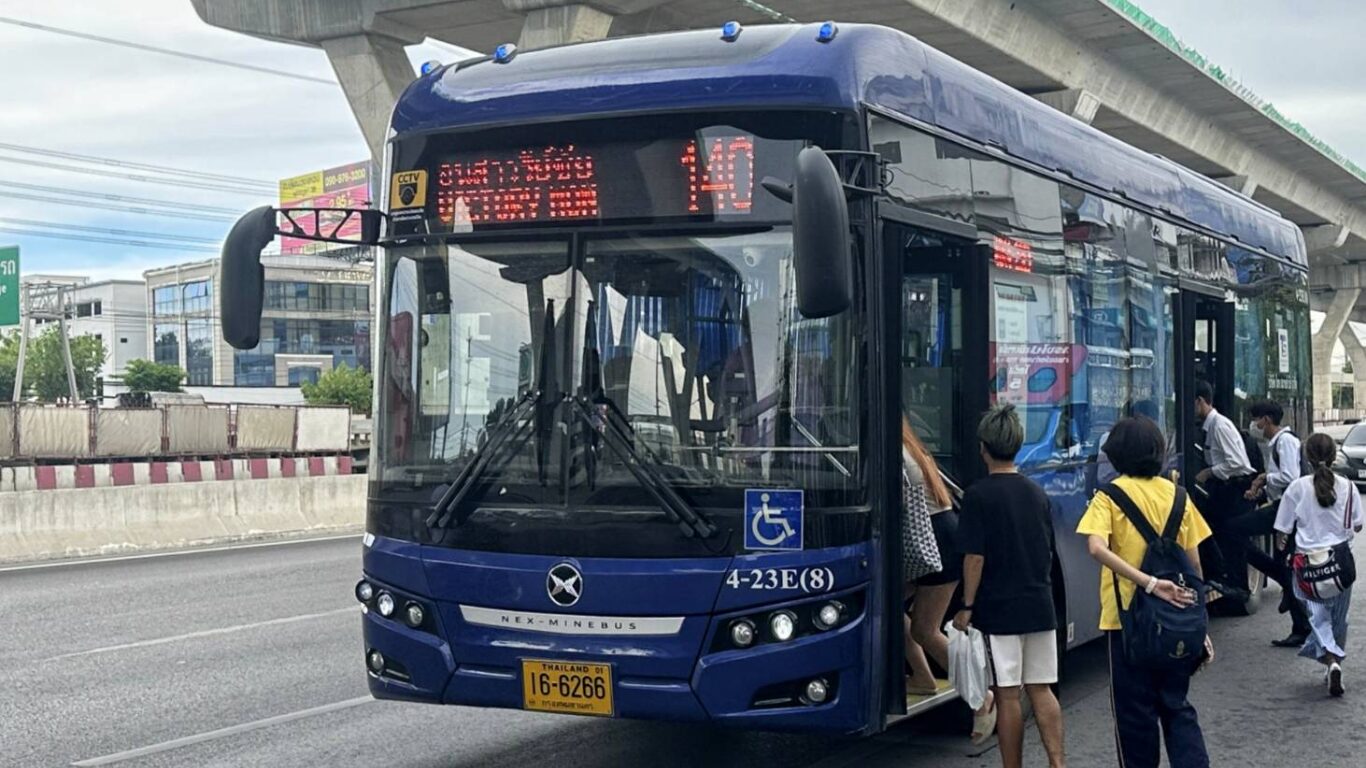
A food-focused day in Bangkok asks you to move from riverside morning markets to old city noodle shops to Chinatown evening street stalls. That’s a city-wide arc, and doing it by taxi means sitting in traffic during the exact hours when the food is at its best.and The famous food in Bangkok
The smarter approach combines two modes: the Chao Phraya sightseeing boat for the river corridor, and Thai Smile Bus routes for the inland connections. Together, they cover the geography of Bangkok’s best eating without the stop-start frustration of road-based transport.
The ThaiGo Day Pass puts both modes on one unlimited card. Board a boat at a central pier in the morning to reach riverside market areas. Switch to a bus mid-morning to connect to the old city neighbourhood for noodles. Ride further into Chinatown by afternoon for roast duck and dim sum. Return by river in the evening, watching the city wind down from the water.
Every one of those transitions costs nothing extra once the Day Pass is in your pocket. Get yours at hellothaigo.com/day-pass before your trip or on arrival.
Building Your Bangkok Food Route by Transport
The logic of a Thai Go food day follows the river and then fans outward:
Morning, River corridor: Board the sightseeing boat at a central pier. The early market hours along the riverside (Pak Khlong Talat flower and food market, Wang Lang local food market) are active from dawn and wind down by mid-morning. Boat noodle stalls near the old city piers open early.
Late morning to afternoon, Old city and inland: Switch to a Thai Smile Bus to reach the neighbourhood streets behind the temple district. This is pad kra pao and pad thai territory, small shophouses, no English menus, exceptional food.
Late afternoon, Chinatown (Yaowarat): Bus connections reach Chinatown directly. Arrive before the evening rush to watch the street stalls set up, roast duck, dim sum, mango sticky rice carts, fresh seafood grilled on the pavement.
Evening, River return: A sightseeing boat back along the Chao Phraya closes the loop. The river at dusk, after a full day of Bangkok’s famous food, is exactly as good as it sounds.
Practical Tips for Eating Your Way Around Bangkok
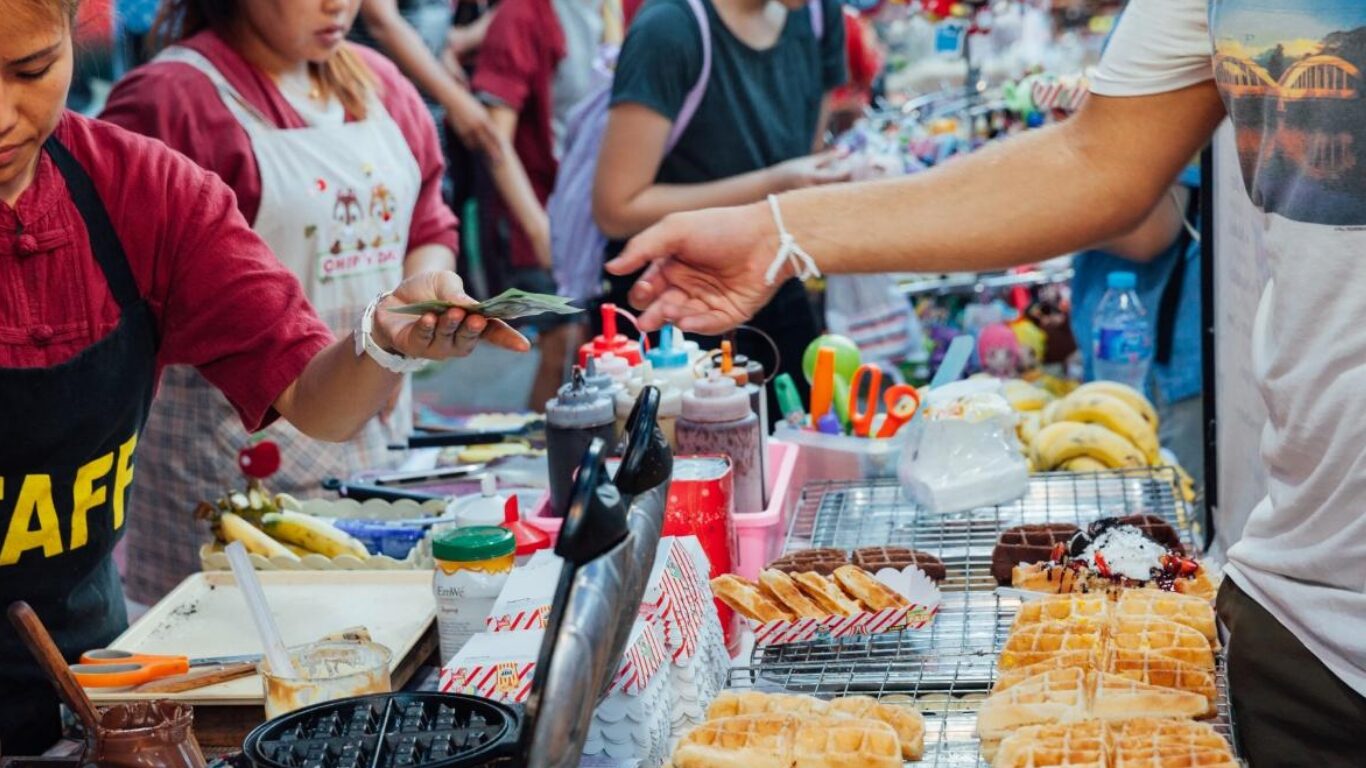
Eat early at markets, the best dishes sell out. Most serious market food is gone by 10am. Arrive at 7 or 8 for the full spread.
Cash is still king at street stalls. Carry small bills. Most vendors don’t have card readers, and fumbling for change slows down a queue that has been moving efficiently for decades.
Follow the locals, not the signs. A stall with a handwritten menu and four plastic stools surrounded by construction workers is almost always better than the laminated tourist version two streets over.
The heat is real, plan an air-conditioned stop (a coffee shop, a temple interior, a bus ride) somewhere in the middle of the day. A Thai Smile Bus ride between food stops doubles as a recovery interval.
FAQ
- What is the most famous food in Bangkok ?
Pad thai, boat noodles, pad kra pao, tom yum goong, and mango sticky rice are consistently at the top of any list. Each represents a different side of Bangkok’s culinary identity, from royal-influenced dishes to pure street improvisation.
- What is the best way to how to get around Bangkok for food?
Combining the Chao Phraya sightseeing boat for riverside stops and Thai Smile Bus for inland destinations gives you the most flexible and traffic-free route. The ThaiGo Day Pass covers both modes with unlimited rides.
- Is Bangkok street food safe to eat?
Generally yes, Bangkok street food is eaten daily by millions of people. Look for stalls with high turnover, food cooked to order, and visible fresh ingredients. Busy stalls are almost always a reliable sign.
- How does the ThaiGo Day Pass help with a Bangkok food day?
It covers unlimited boat and bus travel across connected routes, so you can move freely between riverside markets, old city noodle streets, and Chinatown without paying per trip. Available at hellothaigo.com/day-pass.
- When is the best time to eat street food in Bangkok?
Morning (7–10am) for markets and fresh dishes. Lunch hours (11am–2pm) for shophouse favourites like pad kra pao. Evening (5–9pm) for Chinatown and night market spreads. Bangkok essentially never stops feeding people, but these windows catch the food at its freshest.