使用 ThaiGo 日票 立享 70% 折扣 — 使用优惠码「OCT70」


Introduction
No skyline in Bangkok is more recognisable than Wat Arun at dusk, the Temple of Dawn Bangkok central prang rising 82 metres above the Chao Phraya River, its surface alive with tens of thousands of fragments of Chinese porcelain that catch the fading light and scatter it in every direction.
Wat Arun is not just one of Bangkok’s most photographed landmarks. It is one of Thailand’s most spiritually significant sites, a temple whose history runs from the founding of Bangkok itself through to the present day, whose symbolism reaches into Hindu cosmology, and whose location on the west bank of the Chao Phraya gives it a perspective on the old city that no other temple shares.
This guide covers everything: Wat Arun’s history, what to do inside, when to go, what to wear, how to get there, and how to make the most of the visit whether you’re going at sunrise, midday, or sunset.
History of Wat Arun: From Ayutthaya to the Present Day
The Ancient Temple
The site of Wat Arun has been a place of worship since at least the Ayutthaya period (before the 18th century). The original temple was called Wat Makok, named after a Spondias pinnata tree (makok) that grew on the riverbank.
The Thonburi Period: King Taksin’s Temple
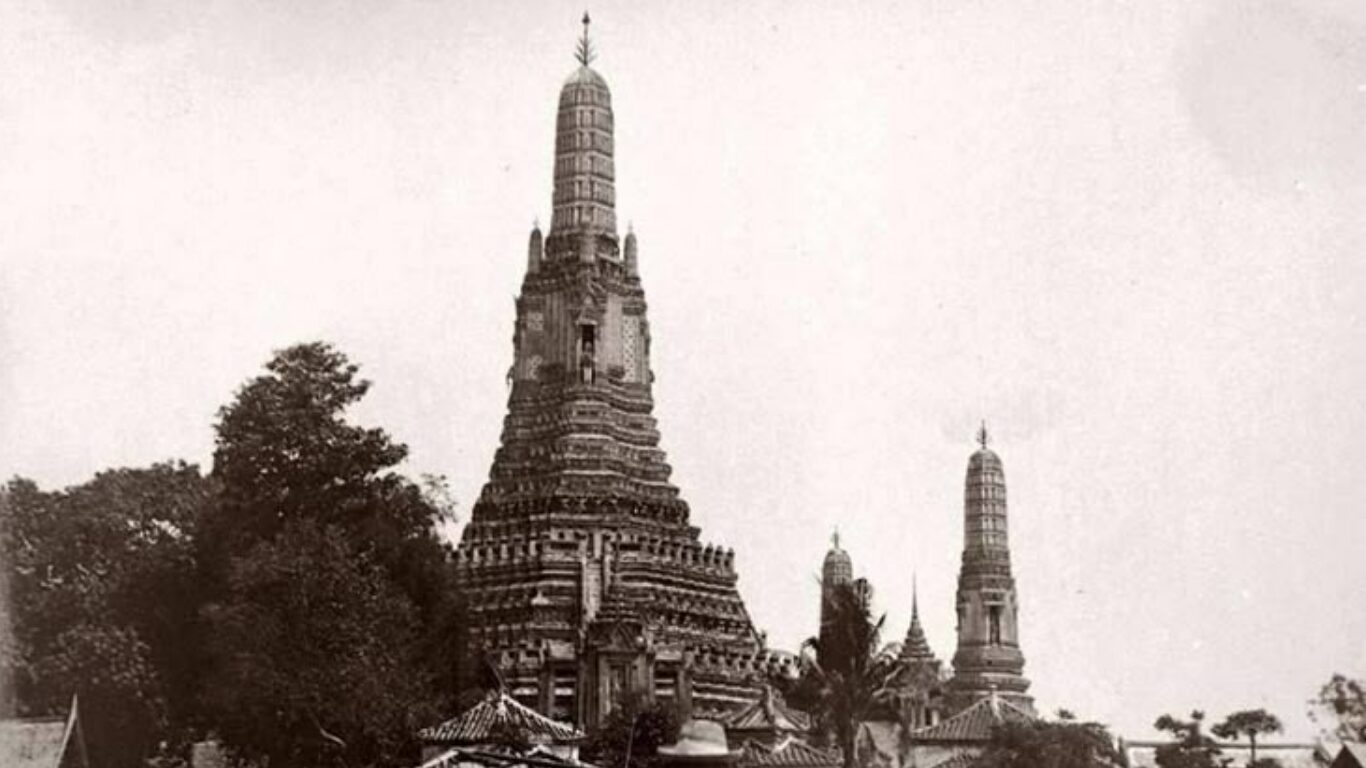
In 1768, after the fall of Ayutthaya to Burmese forces, General Phraya Taksin established a new Thai capital at Thonburi — directly across the river from where Bangkok stands today. According to legend, Taksin arrived at Wat Makok by boat at dawn, saw the first light rising over the prang, and vowed to restore the temple as his reign began.
The temple was renamed Wat Chaeng (meaning “dawn”), a name that later evolved into the Thai word arun, meaning “dawn” (from Aruna, the Hindu god of the rising sun). Taksin enshrined the Emerald Buddha here before it was moved to Wat Phra Kaew in 1785 following the transfer of the capital to Bangkok.
The Bangkok Period: Rama II and Rama III
The iconic central prang, the tower that defines Wat Arun’s appearance today, was built during the reigns of King Rama II and completed under King Rama III in the early 19th century. Rama III oversaw the extensive decoration of the prang with Chinese porcelain, transforming it from a simple tower into the iridescent mosaic landmark it remains today.
The porcelain used was not imported for the purpose, it arrived as ballast in Chinese trading ships docking at Bangkok’s river wharves. Rather than discarding the ceramics, craftsmen broke them into fragments and pressed them into the wet plaster of the prang’s surface to create the elaborate floral and mythological patterns still visible today.
Wat Arun Detailed Summary
| Detail | Information |
| Full name | Wat Arunratchawararam Ratchaworamahawihan |
| Common name | Wat Arun / Temple of Dawn Bangkok |
| Location | 158 Wang Doem Road, Wat Arun, Bangkok Yai, Bangkok |
| Opening hours | 8:00am – 6:00pm daily |
| Entry fee | 200 THB (Thai nationals free with ID) |
| Best time to visit | Sunrise (view from opposite bank) or 4:00–5:30pm for late afternoon light |
| Time needed | 1–1.5 hours inside; allow 30 extra minutes for river crossing |
| Dress code | Shoulders and knees covered; shoes removed before entering buildings |
Architecture and Symbolism off temple of Dawn
The Central Prang
The main prang (tower) at Wat Arun rises approximately 82 metres, making it one of the tallest religious structures in Thailand. Its form follows the Khmer-influenced prang style: a corn-cob shaped tower tapering to a pointed trident finial (the trishula of the Hindu god Shiva).
Mount Meru symbolism: The central prang represents Mount Meru, the cosmic mountain at the centre of the universe in both Hindu and Buddhist cosmology. The four smaller satellite prangs surrounding the central tower represent the four continents at its base. Climbing to the top of the prang is a symbolic ascent of the cosmic mountain.
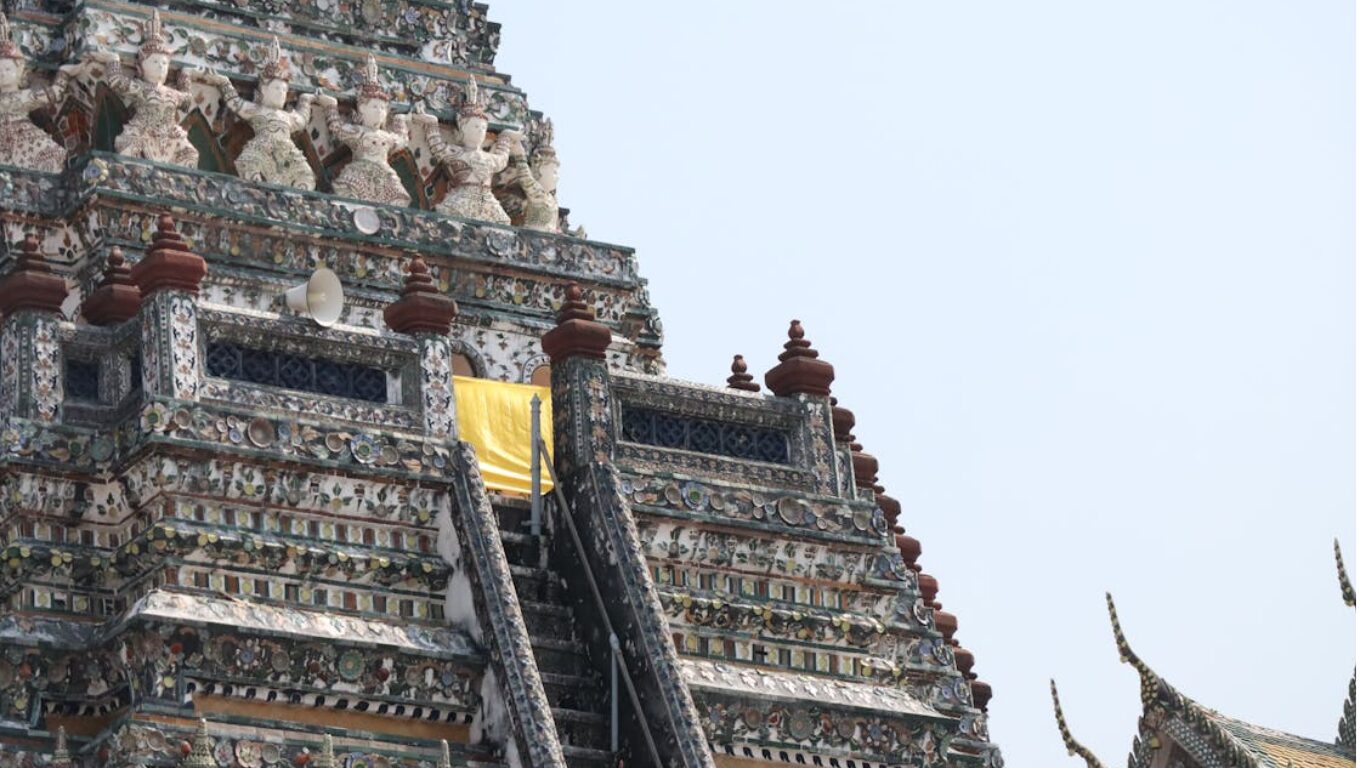
The porcelain surface: Look closely at the prang’s decoration and you’ll see it is made entirely from broken Chinese porcelain pieces, bowls, plates, and decorative tiles, pressed into plaster to form intricate floral and figurative patterns. The shells of Mauritia mauritiana (a species of sea cowrie) are also embedded throughout.
The Figures on the Prang
Four Indra-on-Airavata figures (the Hindu god Indra riding his three-headed elephant) guard the four sides of the main prang. Mythological demons (yakshas) support the structure at lower levels. At each terrace level, small shrines contain images of the Hindu god Narai (Vishnu) on his mount Garuda.
What to Do at Wat Arun
Climb the Central Prang
The steep staircase on the central prang is one of the most exhilarating things to do at any Bangkok temple, and one of the few where visitors can actually ascend. The steps are extremely narrow (some only 25–30cm wide) and rise at an angle of about 70 degrees. Ropes are provided for descent. Secure footwear is essential; shoes must be removed before climbing.
At the top terrace: panoramic views across the Chao Phraya River to Wat Pho, the Grand Palace, and central Bangkok. The view is best in the late afternoon when the city’s towers catch the western light.
The Ordination Hall (Ubosot)
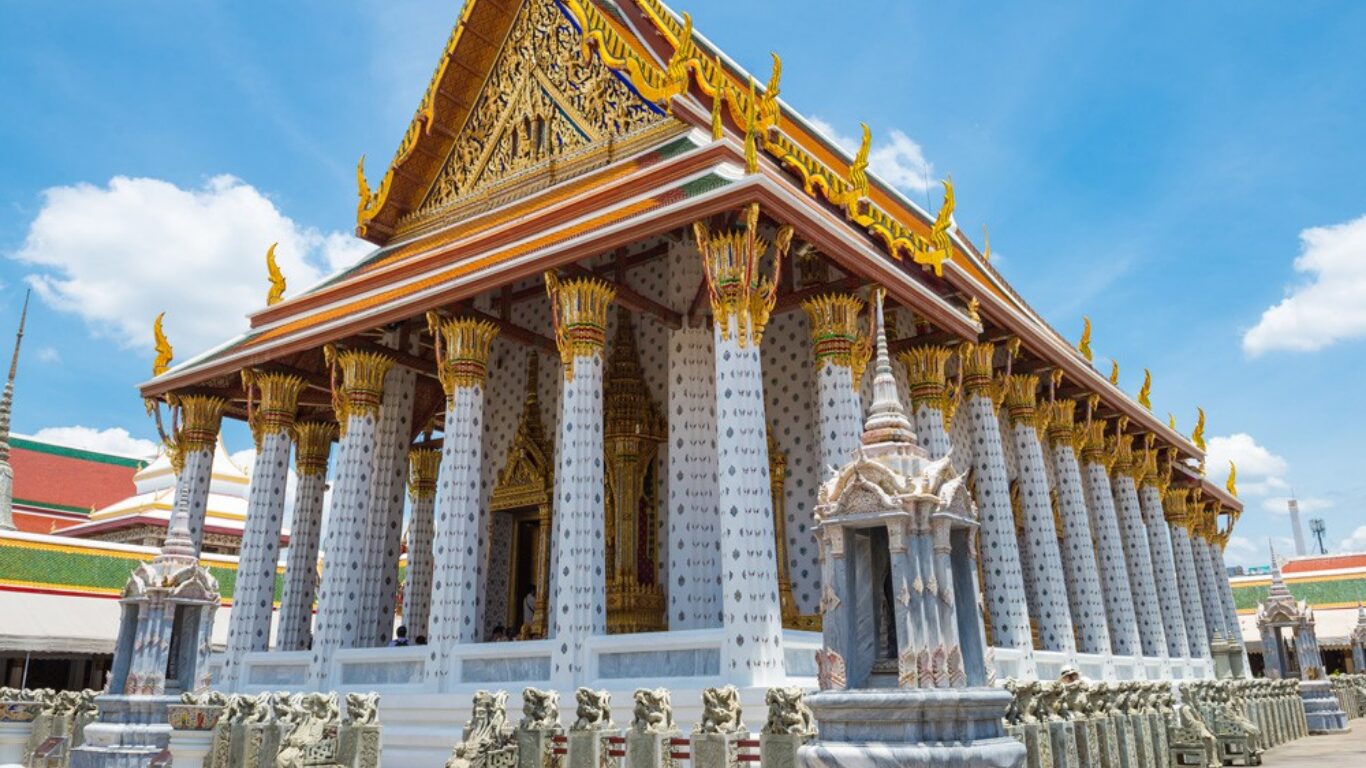
The ordination hall beside the main prang contains the temple’s principal Buddha image, — the Niramitr Buddha, reportedly designed by King Rama II himself. The walls are decorated with murals painted during the reign of King Rama V depicting the life of the Buddha, executed in a style that blends traditional Thai techniques with early Western perspective.
Shoes must be removed before entering the ordination hall.
The Riverside Promenade
The temple grounds extend to the Chao Phraya riverbank, where a stone promenade offers the best ground-level view of the central prang from below. The promenade also faces east across the river toward Wat Pho and the Grand Palace, the classic Bangkok riverside panorama.
The Minor Shrines and Galleries
Explore the smaller shrines around the compound. The two mondops (square shrine buildings) flanking the bot contain important Buddha footprints. The covered galleries connecting the temple buildings are decorated with additional Buddha images and merit-making donation boxes.
Best Time to Visit Wat Arun
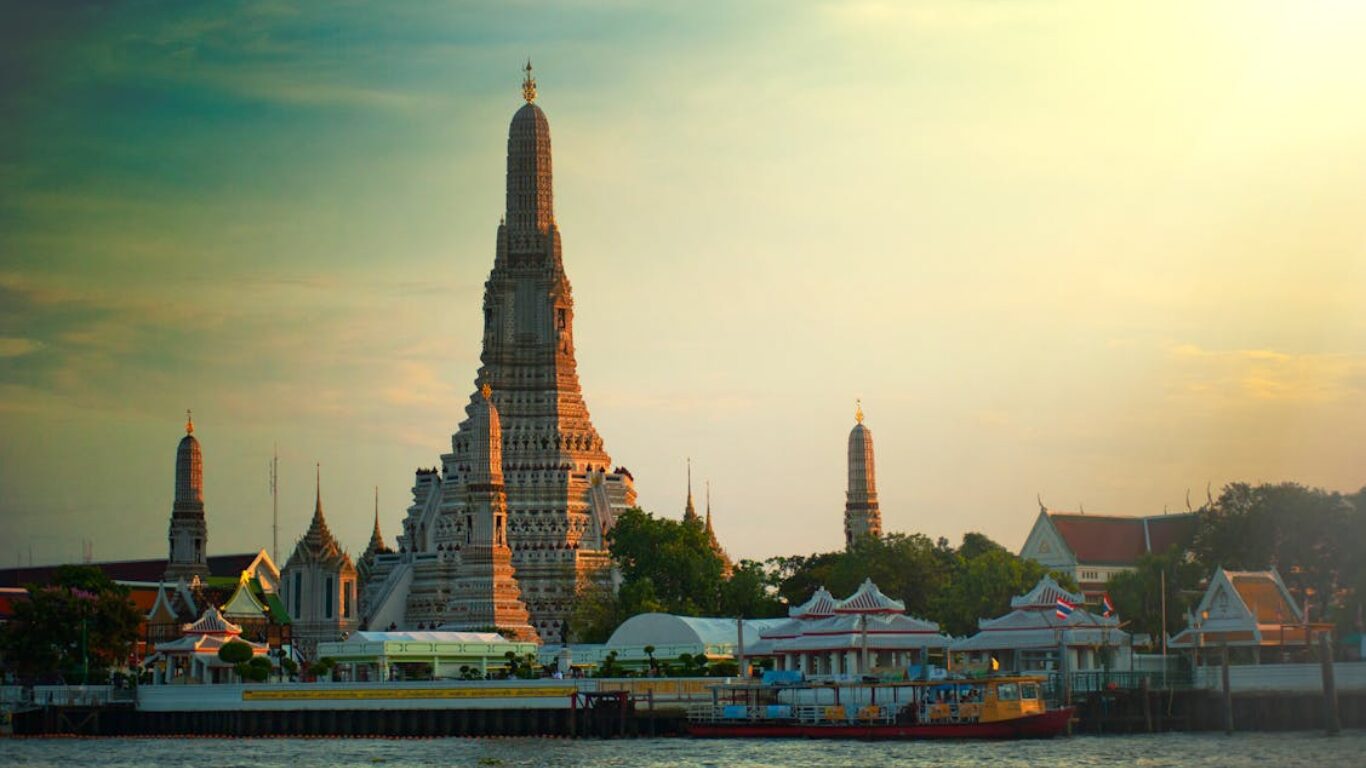
Sunrise (6:00–7:30am)
The Temple of Dawn is named for a reason, morning light hits the east-facing prang before anywhere else, and the porcelain surfaces catch the first sunlight at angles that make the tower appear to glow. The best sunrise view of Wat Arun, however, is not from inside the temple but from the opposite bank of the river, from the riverside walk between Tha Tien pier and the Mandarin Oriental. Standing on the east bank at 6:00am with the temple lit against the sky and the river in front of you is genuinely spectacular.
The temple itself opens at 8:00am, so sunrise visitors should plan to cross when it opens.
Late Afternoon (4:00–5:30pm)
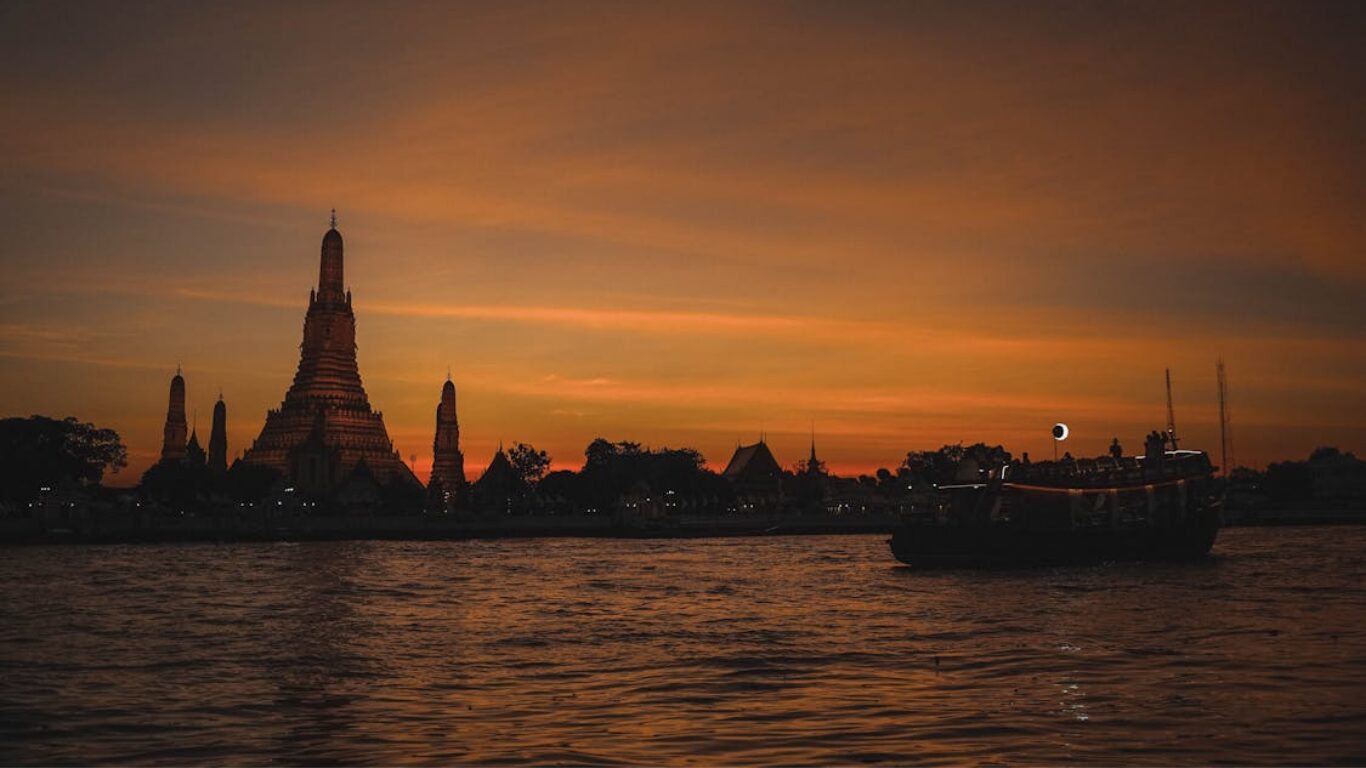
The second-best time inside the temple. The western light hits the prang from the same direction as the river, creating long shadows across the porcelain surface and making the decorative detail most visible. This is the best time to climb the prang for views.
At Night (view from outside)
Wat Arun is illuminated after dark and best viewed from the opposite bank, from the Tha Tien riverbank, from rooftop restaurants like Sala Rattanakosin, or from the river during an evening dinner cruise. The temple closes at 6:00pm and cannot be entered at night.
Getting to Wat Arun
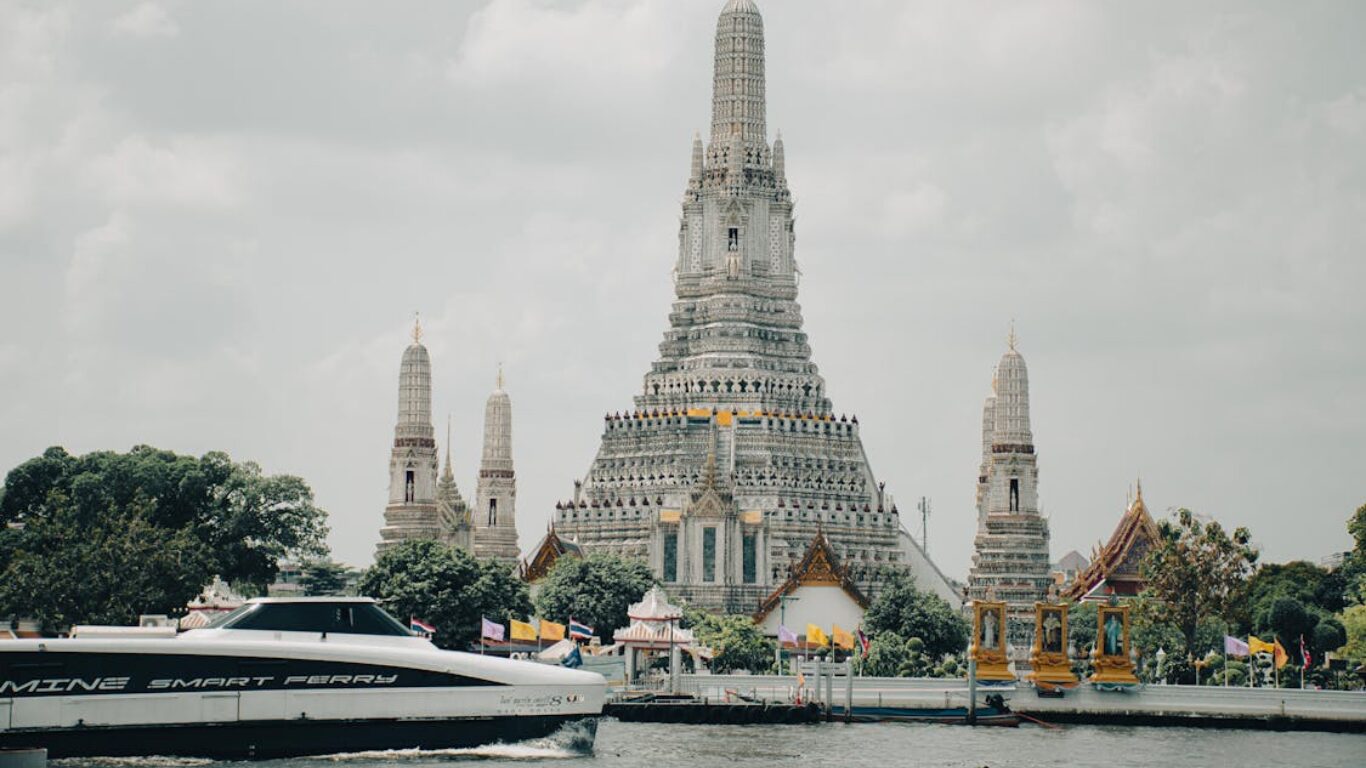
-
By ThaiGo Day Pass (Recommended)
The easiest route to Wat Arun from most of Bangkok:
- Take the Thai Smile Boat to N8 (Tha Tien Pier) on the east bank
- Take the cross-river ferry from Tha Tien to Wat Arun Pier on the west bank
- Ferry price: 5 THB per person (cash only)
- Frequency: Approximately every 10 minutes
- Hours: 5:00am–7:00pm
Get your ThaiGo Day Pass: Purchase at and activate on your first ride day.
-
By BTS + Walk
BTS Skytrain to Saphan Taksin → Thai Smile Boat south along the river to N8 (Tha Tien) → cross-river ferry.
-
By Taxi
Taxi to the cross-river ferry pier at Tha Tien (Wang Thai Road, near Wat Pho). From central Bangkok, typically 80–150 THB depending on traffic.
Dress Code at Wat Arun
Wat Arun has a dress code that is enforced at the entrance:
- Shoulders: Must be covered, no tank tops, spaghetti straps, or off-shoulder tops
- Knees: Must be covered, long skirts, dresses below the knee, or long trousers
- Shoes: Worn on temple grounds; removed before entering the ordination hall or climbing the main prang
- Sarong rental: Available at the entrance for approximately 100–200 THB if you arrive underdressed
Lightweight cotton or linen is recommended, the temple is exposed and Bangkok’s heat is significant, especially on the open promenade between 10am and 3pm.
Combining Wat Arun with Nearby Attractions
Wat Arun sits on the Thonburi (west) bank, but its proximity to the east bank makes it natural to combine with the major Old City temples in a single day.
Recommended circuit:
- Grand Palace & Wat Phra Kaew (Tha Chang pier, arrive 8:30am)
- Walk south to Wat Pho (15 minutes; Tha Tien pier)
- Cross-river ferry to Wat Arun (5 THB, 5 minutes)
- Return by ferry to Tha Tien, then take the ThaiGo boat northward or southward depending on afternoon plans
This full circuit from Grand Palace to Wat Arun takes approximately 5–6 hours including time at each temple.
Getting back: Return to Tha Tien pier on the east bank, then take the Thai Smile Boat north to Tha Chang (Grand Palace area) or south toward Sathorn/Saphan Taksin for onward connections.
Practical Notes
Entry fee: 200 THB for foreign visitors (as of 2026). Thai nationals enter free with national ID. Ticket includes access to all areas including prang climb.
Climbing the prang: The steps are extremely steep. Wear closed-toe shoes with grip. If you have a fear of heights or mobility concerns, the view from the ground-level promenade is still excellent.
Photography: The best photos of Wat Arun are taken from the opposite bank (Tha Tien area), not from inside. Allow 20 minutes on the east bank after crossing back from the temple for riverside photography.
Combine with an evening: Wat Arun viewed from Sala Rattanakosin’s rooftop bar at sunset, with cocktails and the illuminated temple reflected in the river, is one of Bangkok’s finest experiences. Book a table in advance